

The Rule That Prevents Most Mistakes
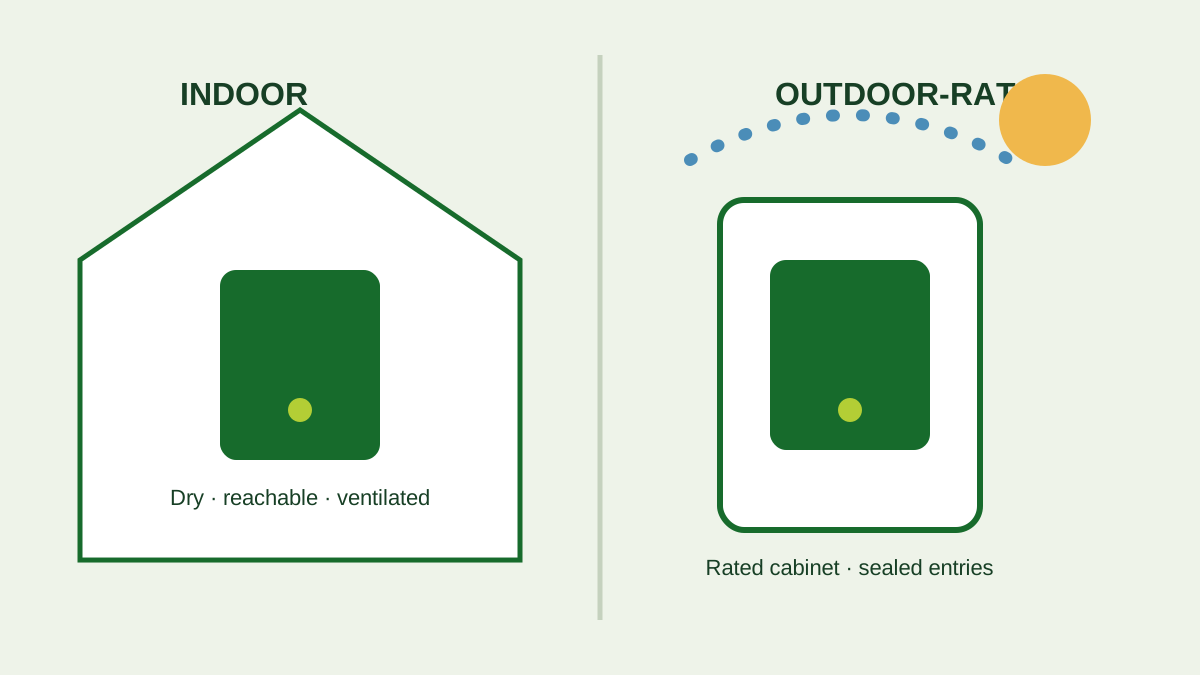
Install a sprinkler controller only in the environment named by its manufacturer. Indoor means a dry, protected location. A porch roof, plastic bag or deep eave does not convert an indoor controller into outdoor equipment. An outdoor-rated controller may resist weather only when its door, seals, cable entries and power connection are installed exactly as documented.
This is a homeowner planning guide, not permission to modify mains wiring. Use a licensed electrician or qualified irrigation technician where local rules require one, where a hard-wired supply is involved, or when the existing cabinet contains wet, damaged or unidentified wiring.
Indoor and Outdoor at a Glance
| Question | Indoor controller | Outdoor-rated controller |
|---|---|---|
| Normal location | Dry garage, utility room or protected basement | Exterior wall or exposed utility area allowed by its rating |
| Weather exposure | None | Limited to the conditions and installation method in the manual |
| Power connection | Often plug-in transformer; varies by market | May use a protected transformer or hard-wired compartment |
| Cable entry | Must stay dry and strain-relieved | Must use approved entries, grommets or conduit |
| Best reason to choose | Easier access and lower exposure | Existing valves terminate outside and no suitable indoor route exists |
Good Indoor Locations
A suitable indoor position is dry, ventilated, reachable without a ladder, close enough to the field wires, and within dependable Wi-Fi range if the controller is connected. Garages and utility rooms commonly work. Avoid locations directly above sinks, near chemical fumes, against surfaces that condense moisture, or where vehicles and stored tools can strike the cabinet.
Do not extend or splice station wires casually just to reach a convenient wall. Poor low-voltage connections create intermittent faults that resemble failing valves or app problems. Use irrigation-rated connectors and an accessible junction method approved for the location.
What “Outdoor” Does—and Does Not—Promise
An outdoor enclosure is a system, not a label. The cabinet door must close, unused openings must be sealed as instructed, cables need suitable entries, and the power method must satisfy local electrical rules. A cracked hinge, missing gasket or open conduit hole can defeat the intended protection.
Mounting in shade can reduce heat stress and screen glare, but shade does not replace the enclosure rating. Keep the cabinet away from direct sprinkler spray, roof runoff, flood-prone walls and places where irrigation water pools around cables.
Five Checks Before Selecting the Wall
Can You Put an Indoor Controller in a Weatherproof Box?
Sometimes a manufacturer sells or approves a compatible outdoor enclosure. A generic sealed box is not automatically safe: it can trap heat, obstruct controls, interfere with radio reception and create unsuitable mains connections. Use only a solution allowed by the controller and enclosure instructions, and follow local electrical requirements.
For a software-focused indoor model, compare an approved enclosure with buying a purpose-built indoor/outdoor controller such as the regional version of Rain Bird ARC8. If the controller will remain inside, Rachio 3 and Orbit B-hyve Indoor are relevant comparison points.
Regional Differences Matter
Supply voltage, plug design, electrical codes, radio approvals and warranty service differ between the United States, Canada, Europe, the United Kingdom, Gulf countries and other markets. Do not import a controller merely because the app is available. Confirm that the exact power supply and product variant are approved for the installation country.
In very hot climates, solar-heated exterior walls can exceed ordinary ambient temperatures. In cold climates, condensation and freeze-thaw cycles can stress seals and wiring. The product’s documented temperature range matters alongside its rain protection.
Stop and Call a Professional When
- The old cabinet contains exposed mains conductors
- Water, corrosion, scorch marks or melted insulation are visible
- A pump-start relay or high-load equipment is involved
- Wire colours and terminals do not match the documentation
- Local code requires hard-wired work by a licensed electrician
- The controller must be moved and field wires need significant extension
- The mounting area floods or receives direct sprinkler spray
Bottom Line
Use indoor equipment indoors and install outdoor-rated equipment exactly as its manual requires. Choose the location by enclosure, power, wiring, Wi-Fi, temperature and service access—not by appearance or marketplace wording. When the installation conditions are uncertain, resolving the location and electrical questions before buying is safer and cheaper than protecting the wrong controller after the fact.