

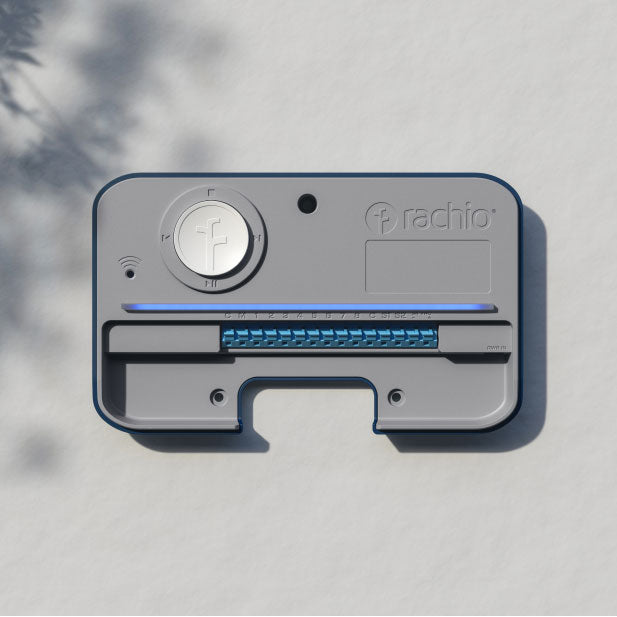
Quick Verdict
The Rachio 3 is the best smart sprinkler controller for most homeowners. It's been Wirecutter's pick for best smart sprinkler controller for several years running, and the water-savings claim holds up against independent data: EPA WaterSense certification requires at least 20% savings over a conventional controller, and EPA's own case-study data on weather-based controllers in real (not lab) conditions averages around 30%. The weather intelligence works. The app is genuinely good. At $179–$229, most users see it pay for itself within roughly 2-3 years on water savings alone, faster in cities with tiered water pricing.
Best for: Zones 5–10, homeowners who water more than 3 months per year, anyone paying tiered water pricing. Not for: Zones 3–4 with very short irrigation seasons (savings take longer to add up), landlords who need a set-and-forget system with no app dependency. Check current price →What the Water Savings Claim Actually Rests On
The "smart controller saves 20–50% water" claim shows up everywhere — Rachio's own product page, YouTube ads, Amazon listings. Here's where the range actually comes from:
- Rachio's own claim: the manufacturer states most users save 20% or more versus a traditional timer, with some users seeing 30–50% depending on climate and prior watering habits.
- EPA WaterSense certification: to carry the WaterSense label, a weather-based controller must demonstrate at least 20% water savings against a conventional clock-based timer in independent testing.
- EPA's broader study data: controlled lab studies of weather-based irrigation controllers average closer to 50% savings, while real-world case studies on actual home and commercial landscapes average closer to 30% — the gap is mostly down to how well a given household's old schedule was already tuned.
Rachio 3 Specs
| Feature | Rachio 3 (8-Zone) | Rachio 3 (16-Zone) |
|---|---|---|
| Zones | 8 | 16 |
| Price | $179.99 | $229.99 |
| Connectivity | Wi-Fi (2.4 GHz) | Wi-Fi (2.4 GHz) |
| Weather intelligence | Yes — hyperlocal | Yes — hyperlocal |
| Soil moisture sensing | Requires add-on sensor | Requires add-on sensor |
| Smart home integrations | Alexa, Google, HomeKit, IFTTT | Same |
| WaterSense certified | Yes | Yes |
| Warranty | 2 years | 2 years |
| App platforms | iOS + Android | iOS + Android |
| Interested in Rachio 3 Smart Sprinkler Controller?Check current price | ||
What "Weather Intelligence" Actually Means
Rachio 3's core feature is what they call Weather Intelligence Plus. It pulls hyperlocal weather data from the nearest weather station (not just a regional forecast), calculates evapotranspiration (ET) — the amount of water your lawn loses daily through evaporation and plant transpiration — and adjusts or skips schedules accordingly.
In plain terms: it skips watering if rain is forecast, runs longer when it's been hot and dry, and runs shorter after a cool overcast week. It does this automatically, without you touching the app.
This is meaningfully different from a "rain sensor" (which only reacts after rain has fallen) or a basic smart controller that just lets you schedule via your phone. ET-based control is the real thing.
What That Means in Gallons and Dollars
The EPA estimates that replacing a standard clock-based controller with a WaterSense-labeled smart controller saves an average home up to 15,000 gallons of water per year. At a typical US residential water rate, that's a real but modest annual dollar saving on its own — the bigger financial win shows up in tiered-rate cities (parts of the Southwest and California especially), where cutting usage can drop a household out of an expensive upper pricing tier entirely, which is worth far more than the raw gallons saved suggest.If you're on a flat, low residential rate (rural well, cheap flat-rate utility), the water-bill savings alone will take longer to justify the $180–$230 hardware cost. If you're on tiered or drought-surcharge pricing, payback is meaningfully faster.
App and Setup Experience
User-reported install times typically run under 15–20 minutes: mount the unit, connect to Wi-Fi, and map your zones in the app (naming each one and setting grass/soil/sun type), based on verified buyer feedback on Amazon. The app walks you through zone configuration clearly.
The Rachio app is consistently rated among the better smart-home irrigation apps. What it does well, per verified buyer feedback and professional reviews:
- Zone-by-zone run history with gallons used (if you enter your flow rate)
- Moisture level graph showing calculated soil moisture over time
- Skip notifications with a stated reason (e.g., rain forecast)
- Flex Daily scheduling (the most automated mode — recalculates daily based on evapotranspiration)
Rachio 3 vs Standard Timer: Cost Picture
The math depends heavily on your local water rate and irrigation season length, but using EPA WaterSense's average savings figure (~15,000 gallons/year for an average home) against the $180–$230 hardware cost: most households see payback within roughly 2–3 years on water savings alone. In tiered-rate cities, payback is meaningfully faster since avoiding the top pricing tier is worth more per gallon than the headline rate suggests.
Pros and Cons
- Weather Intelligence Plus is backed by independent EPA WaterSense data, not just marketing claims
- Flex Daily scheduling is the most sophisticated consumer irrigation automation available
- App is clean and well-reviewed by both professional outlets and verified buyers
- Works with Alexa, Google Assistant, Apple HomeKit, and IFTTT
- EPA WaterSense certified
- Integrates with Husqvarna Automower (via IFTTT) to pause mowing during watering cycles
- 2-year limited warranty for a $180+ device mounted outdoors year-round
- Flex Daily needs a settling-in period to calibrate — confusing for new users who don't expect it
- Some verified reviews report false "no flow detected" alerts and reduced reliability after 2-3 years of outdoor use
- Soil moisture/flow sensing requires an extra-cost add-on (Rachio Wireless Flow Meter)
- Requires 2.4 GHz Wi-Fi — older routers broadcasting 5 GHz only will not work
Who Should Buy the Rachio 3
Buy it if:- You pay more than $150/year on irrigation water
- Your growing season is 5+ months
- You have a smart home already (HomeKit, Alexa, Google Home)
- You want genuine water savings, not just phone control
- You water less than 4 months per year (ROI takes too long)
- You want set-and-forget with zero app engagement
- Your water costs are very low (rural well, cheap flat-rate utility)
- You need more than 8 zones on a budget (consider the Rain Bird ST8I instead)
The Competition
Orbit B-hyve XR ($89–$109): Half the price, does app scheduling and basic weather response well. Lacks ET-based Flex Daily. Good if the Rachio 3 ROI timeline doesn't work for you. Full B-hyve review → Rain Bird ST8I ($120): More zones per dollar, solid reliability, but the app lags behind both Rachio and Orbit. Better for contractors than DIY homeowners. RainBird Wifi Module (add-on to existing controllers, ~$80): Good if you already have a Rain Bird controller and just want remote access. No weather intelligence.Final Score: 9.3 / 10
The Rachio 3 earns its reputation on independently-verifiable grounds: EPA WaterSense certification, multiple years as Wirecutter's top pick in the category, and consistently strong verified-buyer ratings. The water-savings claim holds up against EPA's own data, the app is well-regarded, and the smart-home integrations work well.
What holds it back from a perfect score: the 2-year warranty is unremarkable for an outdoor-mounted device at this price, and the Flex Daily calibration period catches new users off guard.
Check current price on Amazon →Related guides:
- Best Smart Sprinkler Controllers 2026 →
- Rachio 3 vs Orbit B-hyve — Full Comparison →
- How Many Zones Do I Need? Zone Calculator →
- Best Sprinkler Systems 2026 →
Sources
- EPA WaterSense — Weather-Based Irrigation Controllers — controlled studies average ~50% savings, real-world case studies average ~30%.
- Rachio — Water Usage and Water Savings — manufacturer's own savings claim and methodology.
- EPA WaterSense Labeled Controllers — certification requires ≥20% savings vs. a conventional controller.
- EPA WaterSense — Soil Moisture & Weather-Based Controllers — average ~15,000 gallons/year saved per home.
- NYT Wirecutter — Rachio 3 named Best Smart Sprinkler Controller
- Rachio — Warranty Information — 2-year limited warranty from date of purchase (4 years if professionally installed via Rachio Pro).
- Verified Amazon customer reviews for Rachio 3 (8-Zone and 16-Zone listings), accessed June 2026.